

Sustainability Guide · July 2026
We believe exceptional water begins with protecting nature.
Impact Overview
Three connected pillars: Product, Planet, People.
Each year we assess the impact of our source, our packaging, our operations, and the claims we make about them.
Naturally protected Adirondack artesian water that is not intensively filtered, reverse-osmosis treated, or chemically purified before bottling.
Glass-first packaging, recycled corrugated cartons, less avoidable plastic, and clear facts about plastic waste.
Practical reuse, recycling, serving, and proof guidance so partners can tell the story responsibly.
Our Product
Plastic waste makes packaging a product decision.
U.S. plastic containers and packaging generated in 2018.
Of plastic packaging was recycled that year.
Went to landfill instead.
Recycling rate for PET bottles and jars, leaving most unrecovered.
The Planet
Our planet work starts with restrained operations.
We self-limit annual production to 20 million gallons to protect the aquifer.
We avoid intensive treatment and keep the source-to-plant trip under 45 miles.
Premium glass and recycled corrugated cartons, chosen to support circularity.
Optimized equipment, maintenance, and stainless handling to cut waste.
We track packaging inputs, supplier specifications, and every required synthetic.
As we grow, we invest in route, energy, and material improvements.
U.S. plastic containers and packaging, 2018 EPA data. Glass is our answer to that signal: a premium package that protects the water and stays in circulation.
Water Stewardship
Our strongest claim starts with restraint.
Our water comes from a naturally protected confined artesian aquifer in the Adirondack region, filtered through ancient rock. It does not require intensive filtration, reverse osmosis, or chemical purification before bottling. Treatment-heavy systems create waste streams; avoiding treatment avoids them.
Materials
Minimum synthetics keep the purity story credible.
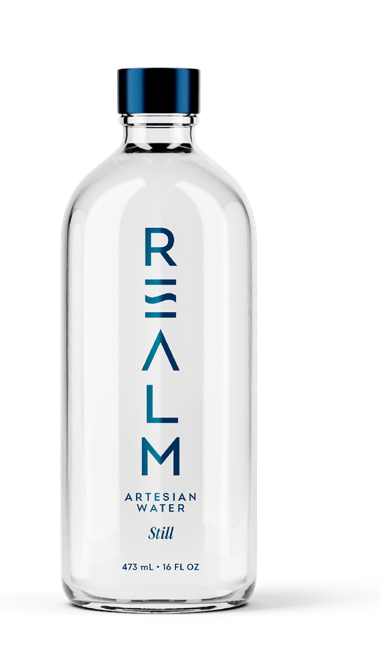
Glass is the primary package. The only synthetic food-contact parts are the functional ones: a cap liner and a seal. Every remaining material has a plain-language purpose, a supplier certificate, and a reduction path on file.
We say minimum necessary synthetic material, subject to final specs. We do not claim plastic-free.
Circular Packaging
Glass is the signal.
Premium glass protects product integrity and supports responsible reuse or recycling. Cartons are recycled corrugated fiber. Cold-retention claims stay unpublished until testing confirms them, because a claim without proof is worth less than no claim at all.
People And Use
Close the loop after every pour.
Select the glass bottle to protect purity and support circular packaging.
Reuse bottles when clean and appropriate, then recycle locally.
Empty bottles and separate caps when local rules require it.
Dispose of caps, liners, and seals as directed by local guidance.
Pre-chill only what you need. We cite savings only after testing.
We say we avoid intensive treatment only where process proof supports it.
Proof And Reporting
A reporting cadence turns principles into progress.
Record owner, evidence, and review date for each one.
Tie every claim to lab data or supplier specifications.
Glass-bottle imagery replaces plastic imagery throughout.
Proof-backed talk tracks and clear guardrails.
Refresh source, packaging, and audit status on a set cadence.
Nature does the work, we do the rest.
Unaltered artesian water, glass-forward packaging, fewer treatment residuals where intensive treatment is avoided, and clear guidance on reuse, recycling, and serving. Every claim on this page is tied to lab data, supplier specifications, or published EPA figures.